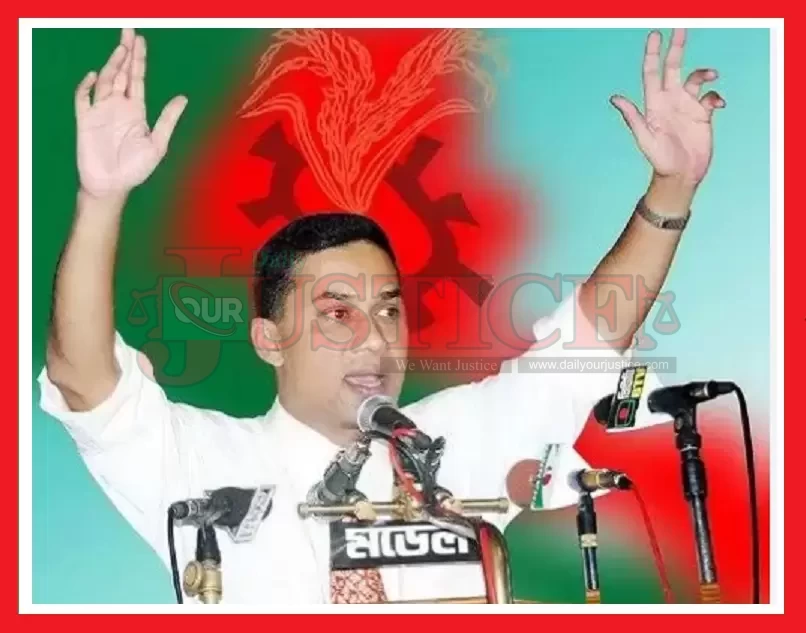
Shaukat Aziz Russell, president BTMA, alleges members of business community are being asked to contribute crores of taka to election campaigns
Labonno chowdhury : Long-standing allegations of political pressure on Bangladesh’s business community during election seasons have resurfaced, following public claims that parliamentary candidates are demanding large sums of money from business leaders — renewing debate over opaque political financing practices ahead of the national polls.
The issue gained prominence after Shaukat Aziz Russell, president of the Bangladesh Textile Mills Association (BTMA), alleged that members of the business community are being asked to contribute crores of taka to election campaigns.Speaking on a televised talk show, Russell said such demands are placing unsustainable pressure on businesses already struggling with rising costs and economic uncertainty.
“In business, we face many pressures and realities, and sometimes we are forced to accept them as part of life,” Russell said.
“But extortion has now reached a level that cannot be considered normal or acceptable.”Recounting a recent experience, he said an MP candidate had directly contacted him seeking support.“I was mentally prepared to cooperate to a reasonable extent, but the demand openly mentioned was for crores of taka. The tone suggested ownership over my company,” he said, adding that such incidents are neither isolated nor uncommon.
Russell argued that while political fundraising is often rationalized by unemployment or grassroots mobilization, demands made by parliamentary candidates cannot be justified on social or political grounds.“If an MP candidate demands Tk20 million and issues threats if even one taka less is offered, that cannot be explained by any reality,” he said. He declined to name specific individuals, stressing that the issue goes beyond personal cases.
“Political party leadership must give clear instructions. The heads of all parties should publicly declare that businesspeople can report such demands without fear,” he said, calling for discipline across the political spectrum.Echoing similar concerns, Bangladesh Knitwear Manufacturers and Exporters Association (BKMEA) President Mohammad Hatem said the cost of doing business in Bangladesh is already among the highest compared to competing countries, while facilities and incentives continue to shrink.
“In this situation, most businesspeople simply do not have the capacity to bear illegal or unjust additional expenses linked to elections,” Hatem told.He acknowledged that some businesses are being compelled to contribute, noting that while one major political party finances its campaigns largely through institutional means, others depend heavily on business donations.“Some may manage to bear these costs, but it is not possible for everyone,” he said, urging political parties to develop independent, service-oriented funding mechanisms to reduce pressure on businesses.
Former BGMEA director Mohiuddin Rubel said exporters are already under severe strain due to rising energy costs, gas shortages, higher taxes, labour unrest, logistical hurdles and extortion during transportation.“When production costs are escalating and competitiveness is declining, businesspeople do not want to take on new illegal expenses,” Rubel said.“What we need is policy support, energy security and a stable, transparent business environment.”
Responding to the allegations, BNP Standing Committee member and Election Management Committee Chairman Nazrul Islam Khan said no specific party or individual had been named.“If any allegation is made against anyone from our party, strict organizational action will be taken,” he said.
Transparency International Bangladesh (TIB) Executive Director Iftekharuzzaman said election-time extortion of businesspeople is not new, but its persistence even after political upheaval is troubling.He noted that while some businesspeople voluntarily contribute in hopes of gaining undue advantages, others are coerced.“Both practices undermine democracy and good governance,” he said, warning that without reforming political financing, such pressures would continue to distort both politics and the economy.